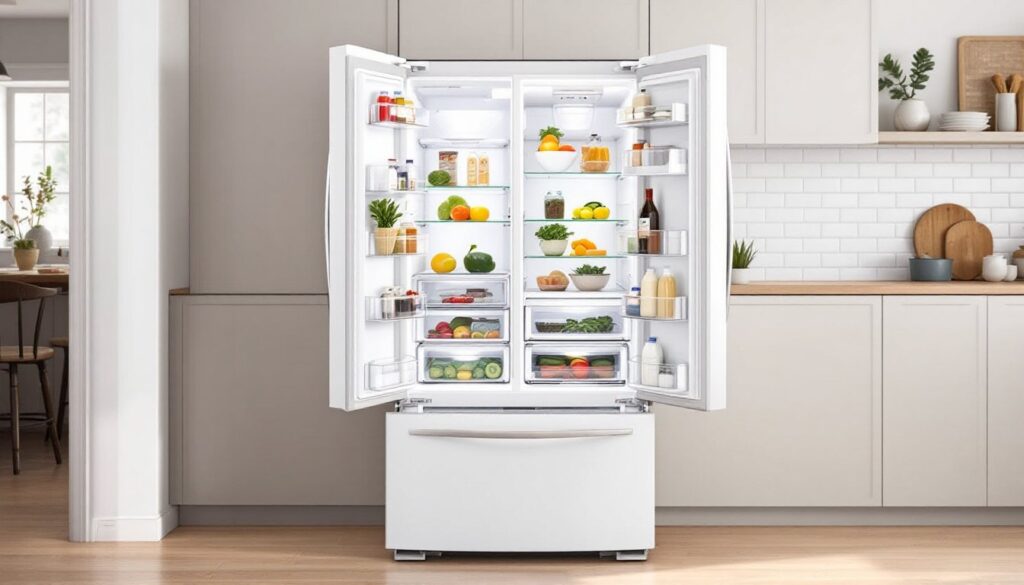

Shopping for a new fridge isn’t just about keeping food cold, it’s about finding the right balance of capacity, efficiency, and features that fit how a household actually operates. A 22 cubic foot refrigerator sits right in the middle of the pack, offering enough room for most families without the footprint or energy draw of oversized models. It’s the Goldilocks zone: roomy enough for weekly meal prep and leftovers, compact enough to fit standard kitchen layouts, and often packed with modern features at a reasonable price point. This guide walks through what makes a 22 cu ft model worth considering, what to look for on the spec sheet, and how to make sure it’ll actually fit through the doorway.
Table of Contents
ToggleKey Takeaways
- A 22 cu ft refrigerator is ideal for households of 3-5 people, offering enough capacity for weekly groceries and bulk purchases while fitting standard kitchen layouts without major renovation.
- Modern 22 cubic foot refrigerators consume 400-600 kWh annually with ENERGY STAR certification, resulting in operating costs of $50-$75 per year—significantly lower than larger models.
- Look for inverter compressors, dual evaporators, adjustable shelving, and humidity-controlled crisper drawers to maximize storage efficiency and keep food fresher longer.
- French door models offer premium features and better organization but cost $1,200-$1,800, while top freezer models are the most energy-efficient and budget-friendly at $700-$1,100.
- Measure your cabinet opening, delivery path, and door swing clearance carefully—a 22 cu ft refrigerator typically measures 30-33 inches wide and needs at least 1 inch of clearance on all sides for proper ventilation and compressor longevity.
Why a 22 Cubic Foot Refrigerator Is the Sweet Spot for Most Homes
A 22 cubic foot refrigerator typically serves households of three to five people comfortably. That’s enough room for a week’s worth of groceries, bulk buys from warehouse clubs, and the occasional leftovers that inevitably multiply after Sunday dinner. According to industry standards outlined in consumer testing by organizations like Good Housekeeping, the 19-22 cubic foot range is often recommended for families of four.
The capacity translates into practical storage: most 22 cu ft models dedicate around 16-17 cubic feet to the refrigerator compartment and 5-6 cubic feet to the freezer. That split works well for households that keep a mix of fresh produce, dairy, and frozen staples on hand without needing a standalone chest freezer.
Beyond capacity, this size class hits a sweet spot for energy consumption. Modern 22 cu ft refrigerators typically draw 400-600 kWh annually, which keeps utility bills in check compared to larger 25+ cubic foot units that can exceed 700 kWh. With ENERGY STAR certification standard on most new models, annual operating costs hover around $50-$75, depending on local electricity rates.
Physically, these units usually measure 30-33 inches wide, 66-70 inches tall, and 33-36 inches deep (with doors and handles adding an extra 2-3 inches). That means they fit standard 36-inch-wide cabinet openings with room for airflow, critical for compressor longevity. Unlike 26+ cubic foot behemoths that often require counter-depth modifications or custom cabinetry, a 22 cu ft model drops into most kitchens without major renovation.
Key Features to Look for When Shopping for a 22 Cu Ft Fridge
Not all 22 cubic foot refrigerators are created equal. The spec sheet matters, but so does how the interior is laid out and what tech is baked in. Here’s what separates a solid buy from a future Craigslist regret.
Energy Efficiency and Smart Technology
ENERGY STAR certification should be table stakes in 2026. Look for models with the blue label and check the yellow EnergyGuide sticker for estimated annual kWh. The difference between an efficient model (450 kWh) and a power hog (650 kWh) can add up to $25-$30 per year, over a 15-year lifespan, that’s real money.
Inverter compressors are worth seeking out. Unlike traditional on/off compressors, inverter models adjust cooling speed continuously, reducing temperature swings and noise while improving efficiency by 20-30%. Many manufacturers now offer 10-year warranties on inverter compressors, a sign of confidence worth noting.
On the tech front, smart connectivity has moved from gimmick to genuinely useful. Wi-Fi-enabled models let users adjust temps remotely, receive door-ajar alerts, and even run diagnostics before calling a repair tech. Some integrate with home assistants for voice control. If the household already runs smart thermostats and lights, a connected fridge fits the ecosystem. If not, it’s a nice-to-have, not a must-have.
Dual evaporators prevent odor transfer between the fridge and freezer compartments and maintain optimal humidity in each zone. Single-evaporator systems are cheaper but can dry out produce or frost up the freezer faster. For serious home cooks who store fresh herbs and delicate greens, dual evaporators make a difference.
Storage Configurations That Maximize Space
A 22 cu ft fridge can feel roomy or cramped depending on how the interior is organized. Adjustable shelving is non-negotiable, look for split shelves or half-width shelves that slide to accommodate tall pitchers or sheet cakes. Tempered glass shelves are easier to clean and contain spills better than wire racks.
Door bins should be deep enough for gallon jugs and adjustable in height. Some models feature “gallon door storage” with reinforced bins and a hinge system rated for the extra weight. If the household goes through milk, juice, or cold brew by the gallon, this matters more than it sounds.
Crisper drawers with humidity controls keep produce fresh longer. High humidity settings suit leafy greens: low humidity works for apples and peppers. Full-width drawers (sometimes called deli or meat drawers) with adjustable temperature zones are ideal for cheese, deli meats, or marinating proteins without cross-contaminating the main compartment.
Freezer organization often gets overlooked until someone’s digging for frozen peas at the bottom of a frost-covered abyss. Look for pull-out baskets, dividers, or tiered shelving. French door models typically offer better freezer organization than side-by-sides in this size class, with full-width baskets instead of narrow vertical slots.
Top Styles: French Door vs. Side-by-Side vs. Top Freezer
The configuration of a 22 cubic foot refrigerator affects both how the kitchen looks and how the fridge functions day-to-day. Each style has trade-offs.
French door models dominate the market for good reason. Two narrow doors open to a full-width refrigerator compartment, with a pull-out freezer drawer below. This design puts fresh food at eye level, reducing bending and making it easier to spot that leftover container hiding in the back. The narrow door swing is a win in tight kitchens where a full-width door would block traffic. Freezer drawers often have better organization than vertical compartments, but bending down to dig through frozen goods isn’t for everyone, especially for anyone with mobility issues. Expect to pay a premium: French door models in the 22 cu ft range typically start around $1,200-$1,800.
Side-by-side refrigerators split the unit vertically: fridge on one side, freezer on the other. This layout provides eye-level access to both compartments and works well in galley kitchens where door swing is limited. The downside? Narrow compartments make it tough to store wide items like pizza boxes, sheet pans, or party platters. For households that frequently prep large meals or entertain, this can be a deal-breaker. Side-by-sides typically cost $900-$1,500 in the 22 cu ft range.
Top freezer models are the workhorses, simple, efficient, and affordable. The freezer sits on top, the fridge below. This old-school layout is the most energy-efficient (often 10-15% better than French door models) because the compressor doesn’t have to work as hard. They’re also the cheapest, starting around $700-$1,100 for a 22 cu ft unit. The trade-off: basic features. Expect fewer adjustable shelves, no dual evaporators, and minimal smart tech. Fresh food is stored below waist level, which means more bending. But if budget or efficiency is the priority, top freezers still deliver.
For those considering space-efficient designs in smaller homes or apartments, top freezer models often have the slimmest profiles, making them easier to maneuver through tight hallways or up stairs.
Installation Considerations and Measuring Your Space
A 22 cu ft refrigerator that doesn’t fit is a 600-pound paperweight. Measure twice, order once.
Start with the cabinet opening. Measure the width, height, and depth of the space where the fridge will sit. Add 1 inch clearance on each side and 1 inch on top for airflow. If the opening is 33 inches wide, the fridge can’t exceed 31 inches. Skipping this step leads to overheated compressors and early failure, ventilation isn’t optional.
Depth matters more than most people think. Standard-depth refrigerators (33-36 inches deep, not including doors) protrude past typical 24-inch-deep base cabinets by nearly a foot. Counter-depth models (around 30 inches deep) sit flush with cabinetry for a built-in look but sacrifice 2-3 cubic feet of interior space. If aesthetics are a priority and the household can live with slightly less room, counter-depth is worth considering. Just know it usually costs 15-20% more for the same capacity.
Measure the delivery path. That means doorways, hallways, stairwells, and tight corners. Most exterior doors are 36 inches wide, but remove 2 inches for the door frame and jamb, a 34-inch opening is the real number. If the fridge is 33 inches wide with doors attached, it’s not getting through without removing the doors (most manufacturers design hinges for easy removal, but check the manual). Measure hallway width and any 90-degree turns. Delivery crews can usually angle a fridge through tight spots, but not if there’s furniture or a wall in the way.
Check door swing clearance. In tight kitchens, a refrigerator door that swings into a cabinet or island is a daily headache. Make sure there’s at least 90 degrees of clearance for the doors to open fully. French door and side-by-side models need less swing space than single full-width doors.
Water line access. If the fridge has an ice maker or water dispenser, it’ll need a cold water line. Most kitchens have a shutoff valve behind or near the fridge location. If not, running a new line is a straightforward DIY task with a saddle valve kit and 1/4-inch copper or braided stainless tubing, but it may require drilling through a cabinet or wall. Always shut off the main water supply before tapping into existing plumbing.
Electrical requirements are typically straightforward: a standard 120V, 15-amp dedicated circuit. Don’t plug a fridge into a shared circuit with other heavy-draw appliances like microwaves or dishwashers. If the existing outlet is behind the fridge location, make sure there’s enough slack in the power cord to pull the unit out for cleaning without unplugging it, or install a recessed outlet box.
Permits and pros. Moving a fridge into an existing space doesn’t require a permit. Running new plumbing or electrical circuits usually does, depending on local codes. If the install involves relocating gas lines (rare, but possible in older homes with unusual setups), call a licensed plumber. Most appliance retailers offer delivery and install services for $50-$150, which includes hauling away the old unit, worth it if stairs or tight doorways are involved.
Conclusion
A 22 cubic foot refrigerator offers the right mix of capacity, efficiency, and features for most households without the bulk or cost of larger units. Prioritize energy ratings, smart storage layouts, and a style that fits both the kitchen layout and how the household actually uses the fridge. And measure everything, twice. With the right prep, a new fridge drops in without drama and keeps running for 15+ years.